
PHILOSOPHY
The Durston approach is to make gear simpler, lighter, and more functional so you can thrive in the backcountry. We do this through five core philosophies:
1. First Principles Design
Outdoor gear is often sub-optimal because the design hasn’t been developed from first principles. For example, most tents start from a popular pre-existing architecture, and then when shortcomings are identified designers will add on features to improve that, rather than asking if they should be using that basic shape in the first place.
An example of this is the proliferation of variants off of the classic single pole pyramid design. Single pole pyramid tents have an admirable simplicity to them but are inherently a low volume (small) shelter because a single pole is not enough structure to create a lot of space. If a designer is okay with this tradeoff, then a single-pole pyramid is a nice base geometry, but if a designer is not they should look at other starting points. But instead the tent world is filled with tent designs with piled post-hoc ideas onto the single-pole pyramid such as struts and short poles being added at the peak to improve headroom, struts around the lower edges, and mid-panel guyouts to pull out the walls for more volume.
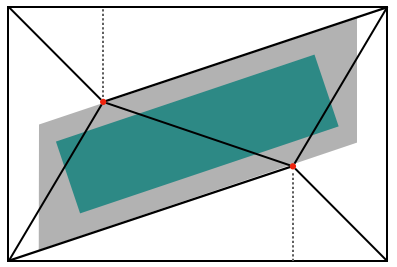
A better approach is to contemplate the first principles of geometry, physics, and tension to identify the ideal form that minimizes the need to layer on post hoc solutions. With the X-Mid, we spent years mulling over these fundamentals, such as the relative merits of designing a tent with three, four, or five sides; and whether two poles are better than one pole plus struts. From this, the patented “double diagonal” X-Mid geometry (above) emerged. This improves volume with a second pole while eliminating the need for guylines, odd angles, struts, poles in the doorways, and maximizes the volume: area ratio. For the geeks out there, we’ve written a much longer post explaining this.
This philosophy of reasoning every aspect from the first principles of geometry and physics is the best way to design gear and thus is the starting point for every piece of gear we release. That includes how many adjusters we use on a trekking pole, how we design our pack frames, and the novel pole architecture for our freestanding X-Dome series.
2. Coherent Design
Marketing departments have been claiming for decades that their gear “makes no compromises.” This couldn’t be further from the truth because design is compromise. If you build a backpack with beefy fabrics, you’ve compromised on that item being lightweight, or if you build a tent with 1 pole instead of two you've compromised space for weight savings. Almost every design decision has pros and cons - which makes it a compromise.
Compromise is inevitable, which is why the best possible approach is to acknowledge this and focus on a design that compromises consistently to achieve a coherent end product. On the market today there are sleeping bags with delicate shell fabrics yet overkill #8 zippers, and packs with huge 70L capacity yet a weak frame and no load lifters. These are not coherent designs, and neither are products where the designer tries to pile on features to make it work for every circumstance.
When we design gear, the intended use is clear from the outset and every decision is made with that goal in mind to achieve a coherent end result where every tradeoff works towards the same goal.
3. Field Validation
It’s impossible to design excellent equipment without extensive field experience and testing because the challenges that gear can face in the wild are too diverse and unpredictable to foresee from a desk. Yet far too many outdoor products contain deficiencies from insufficient validation.
For example, many tents have doors that channel rain into the tent, vents that get permanently wrinkled when packed, flys that sag and stick to the interior, and door toggles that can’t be used with cold hands.
Our design is led by Dan Durston who has extensive outdoor experience, including thru-hiking the Pacific Crest Trail (4200km), hiking the first yo-yo of the Great Divide Trail (2300km), setting the fastest known times on long routes, packrafting first descents, and completing numerous unique routes in challenging off-season conditions. These experiences inform each design and before any product is released, we use it in a wide range of conditions. That’s not to say we’ll think of every good idea, but you can be assured that our designs are informed by and extensively tested in a wide range of conditions.
4. Quality
We are obsessive about achieving the highest quality in both design and manufacturing. However, it’s easy for anyone to say this, so instead of believing our claims we point you towards the growing list of top awards our designs have gotten from respected outdoor gear publications such as BackpackingLight, Section Hiker, Outside, Bikepacking.com, and OutdoorGear Lab.
We also encourage you to investigate the build quality of our tents where you’ll find things like full double stitching even on minor details like around the fly hem – that is rarely done in the industry. That’s because we use the best factories in the world and then we go a step beyond and specify additional quality steps like overkill stitching that larger companies can’t justify.
Beyond this, I ask you to look at the quality of the designs, the quality of our photos, and even the quality of the answers you are reading now, as evidence that quality permeates everything we do.
5. Community Feedback
We're proud of the gear we design, but we're also aware that despite our best efforts, we will not have every good idea, nor release products so perfect they can not be improved upon. Good ideas also come from our community of users, which is why we seek out, listen, and implement suggestions from the community.
Of course it is easy for any company to say they listen to users and incorporate their feedback, but you would be hard pressed to find another company that takes the active role we do. We have a close connection to all our customers because we sell directly to them instead of through retailers, ask everyone to leave reviews, and then we further engage daily with our user communities on Facebook and Reddit, along with other hiking communities like r/Ultralight, Backpackinglight.com, Trek-Lite.com - all towards our goal of supporting our users, improving our products, and giving back to the community through thought leadership.
More than just talk, we rapidly implement improvements including updating our gear often almost every batch. Our focus on constant improvement drives our factories a bit nuts but it is essential for taking our gear from good to great.
Thanks for your interest,
Dan Durston
